Select Page
In the Land of Fjords – Discover Norway’s frozen beauty

In the Land of Fjords – Discover Norway’s frozen beauty

“Only the one who wanders will find new paths” – Norwegian proverb


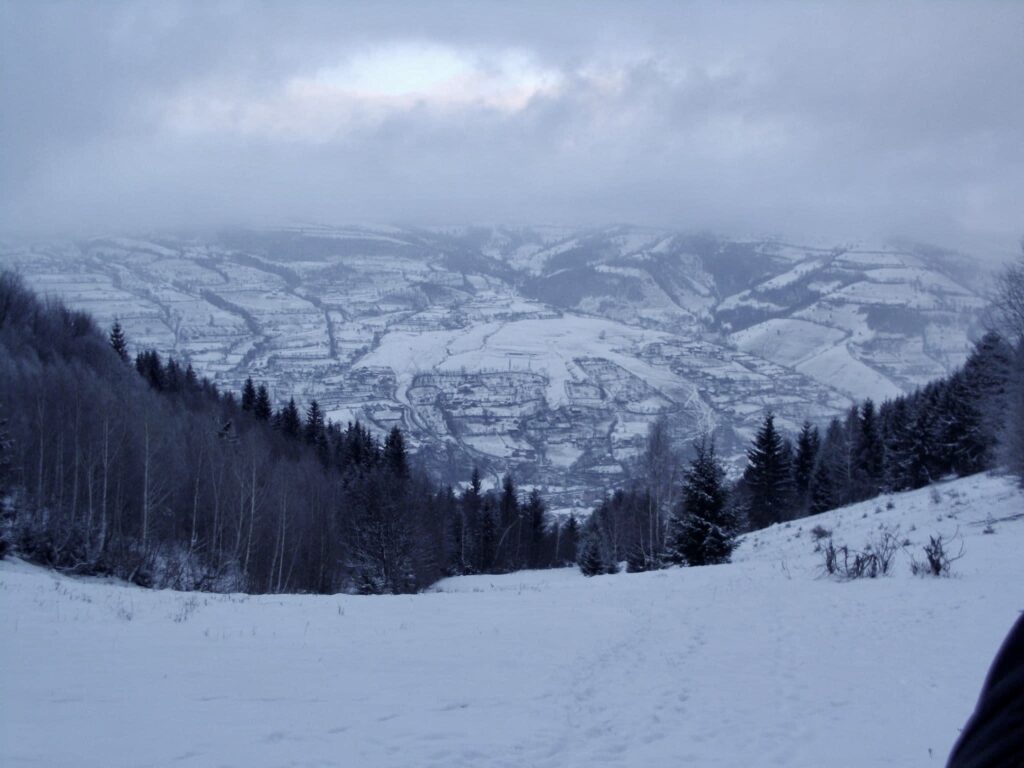
Norway in winter feels like the world has chosen silence on purpose. Norway is often called the land of fjords, and for good reason.

The cold doesn’t bite. It clarifies. Air turns sharp and honest, every breath a small awakening. Snow gathers softly on rooftops and pine branches, as if the land is being rewritten in white ink. Sound fades. Even your thoughts slow down, respectful of the quiet.

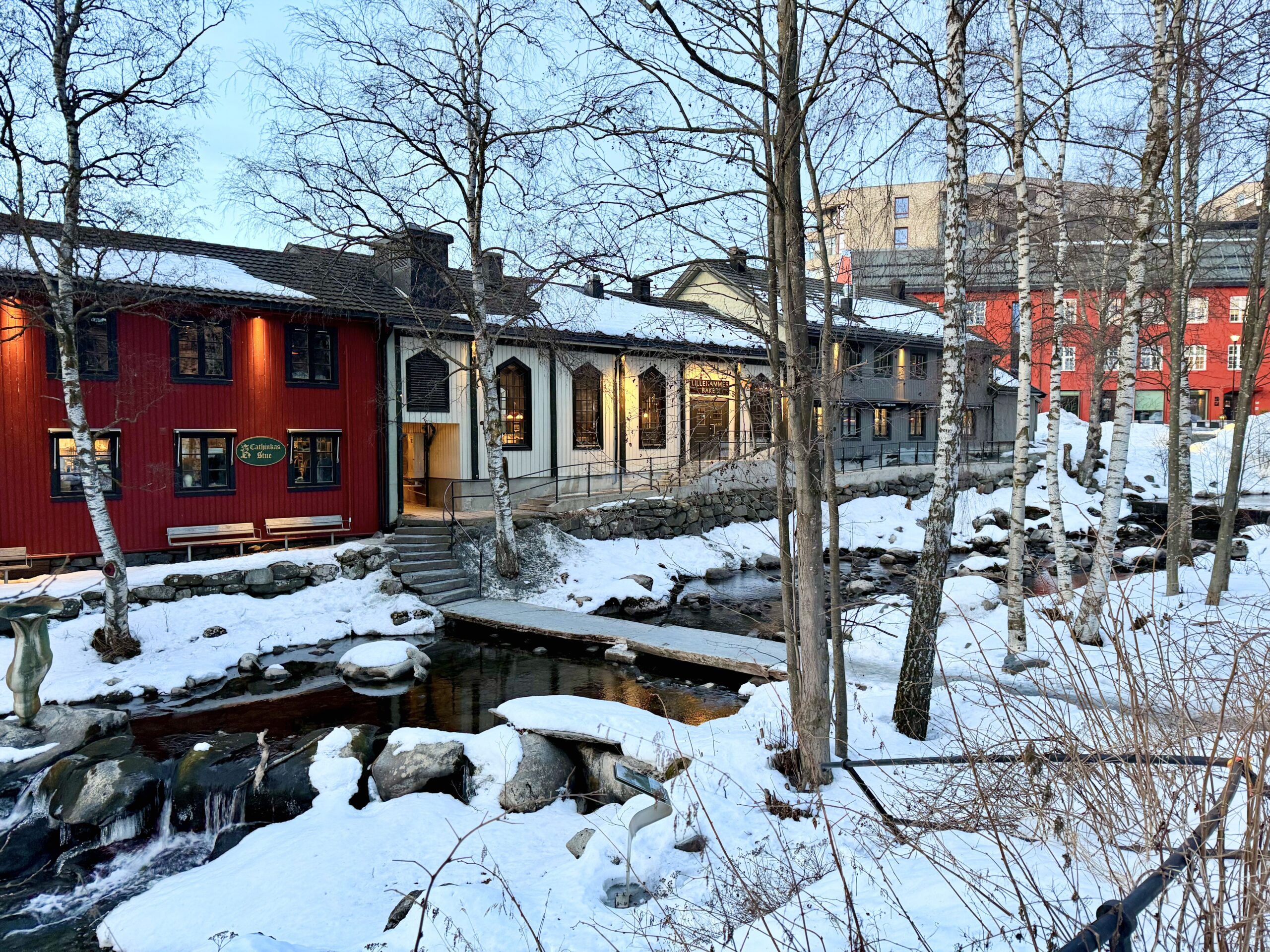
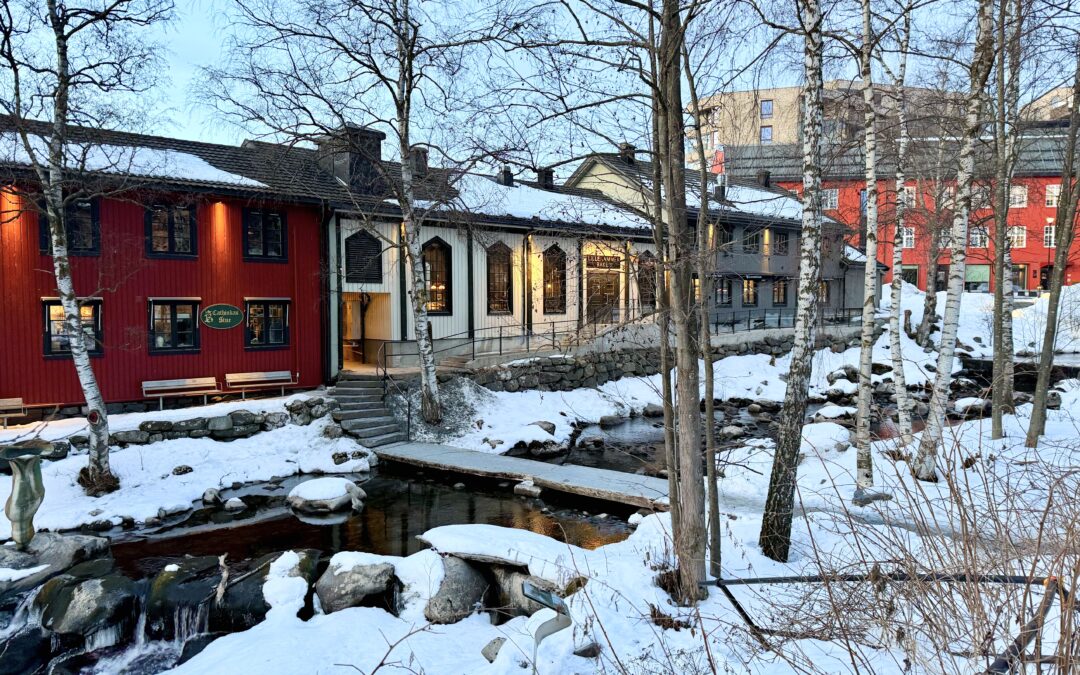
Villages glow rather than shine. One window is lit. Then another. Warmth becomes visible. You pass a red cabin half-buried in snow and imagine the hush inside: wool blankets, a kettle singing, boots drying by the door. Comfort feels earned here.

Norway doesn't ask you to conquer it, It asks you to listen

And if you do, you leave with something rare: a quiet that stays warm long after the cold lets go.

It was a cold February morning when I first set eyes on Norway’s frozen mountains, as our flight began its descent to Oslo-Torp Airport. Your first time in Norway deserves a little poetry. Not the flowery kind, but the kind written by wind, stone, and water.

In Norway, towns do not simply sit on the land. They seem to have grown out of it, as if the mountains whispered them into being.

Norway’s villages do not shout for attention. They glow. They endure. They feel like places where legends would feel at home, where the border between the ordinary and the enchanted is as thin as morning frost.

Norway is often called the land of fjords, and the title is well earned. A fjord is a long, deep, narrow stretch of sea that reaches far inland, carved by glaciers over thousands of years and later filled with saltwater. Norway has more than 1,000 of them, more than anywhere else on Earth, and many are considered among the most beautiful landscapes in the world.

Norway’s stunning fjords are some of the most beautiful natural wonders in the world. With their deep blue waters surrounded by towering cliffs and green valleys, the fjords capture the essence of Norway’s breathtaking landscape.

Fortunately, exploring these majestic sites is easier than ever, thanks to Norway’s excellent infrastructure.

Modern roads, efficient public transport, and well-organised tours make it simple for travellers to reach these remote areas and enjoy their beauty.

According to Drury (2026), travel guides have always played an essential role in helping people discover new places. This is especially true in Norway, where guides share not only routes but also stories that connect travellers to the culture and history of the land.

Definitions fall short the moment you arrive in Norway

A fjord is more than just a beautiful scene; it is an experience that reveals what Norway is all about. As Lee (2017) points out, the fjords reflect the country’s identity, melded with its culture and traditions.

When visiting places like Geirangerfjord or Nærøyfjord, travellers don’t just see stunning views; they take part in the story of Norway’s natural beauty, steeped in centuries of history. Each fjord has its own unique features, offering travellers a range of activities, such as kayaking, hiking, and even fishing.

These adventures provide a deeper understanding of the land and its people, showing how the rugged environment has shaped Norwegian life throughout generations. 

In this way, the fjords serve as a bridge between visitors and the local culture. The warm hospitality of the Norwegian people enhances this experience, making it easy for travellers to connect with the community.

From small fishing villages to larger towns, each area brings its unique flavours and traditions to life. Sample local cuisine or participate in a cultural festival to fully immerse yourself in Norway’s rich heritage as you explore these iconic fjords.

For first-time travellers, it’s important to prepare for the many outdoor adventures that the fjords offer. The varying landscapes mean there’s something for everyone, whether you’re looking to take a leisurely boat ride or tackle challenging hikes.

Packing proper gear, understanding the weather patterns, and exploring the well-marked trails will make the experience enjoyable and safe. With the right preparation, the stunning fjords of Norway can truly become a journey of a lifetime, filled with memories of majestic views and cultural experiences that define this remarkable country. When exploring Norway’s fjords, two must-see destinations stand out: Geirangerfjord and Nærøyfjord. 

Geirangerfjord, often praised for its breathtaking beauty, features lush green cliffs and stunning waterfalls, such as the famous Seven Sisters. A visit here offers visitors the chance to take a fjord cruise, allowing for close views of the striking scenery.

Lonely Planet highlights the Dalsnibba Summit as one of the best viewpoints, offering panoramic views of the fjord and surrounding mountains. As noted by Coopere, hiking to this viewpoint is a rewarding experience, perfect for those who enjoy the outdoors.

On the other hand, Nærøyfjord is known for its narrow, dramatic landscapes and is a UNESCO World Heritage site. The fjord is surrounded by steep mountains and cosy villages that add to its charm. According to the Lonely Planet guide, a kayak trip is one of the best ways to soak up the serene atmosphere and gain a unique perspective on the fjord.

Travellers can paddle quietly through the waters, watching for wildlife and taking in the stunning views. As noted in the feedback from Oklevik et al., booking these activities in advance is essential, especially during peak seasons when spots can fill up quickly.

When planning your visit to these fjords, it’s important to check for seasonal availability of tours and activities. Both Geirangerfjord and Nærøyfjord have peak tourist seasons during late spring and summer. Travellers recommend securing accommodation and tour bookings well in advance to avoid disappointment. Websites often offer discounts for early reservations, which can also help with budgeting.

Additionally, consider the best time of day for your visits. The light changes throughout the day can dramatically alter the appearance of the fjords, with morning light highlighting the waterfalls beautifully. Evenings can provide stunning sunsets that make for perfect photo opportunities. Feedback from travellers indicates that exploring during both dawn and dusk can provide some of the most memorable experiences.

The air feels startlingly clean, as if the world has just exhaled. Mountains rise abruptly from the water, their slopes dusted with snow, their presence quiet but absolute. There is no rush here. Even the water seems to pause, lying still beneath towering cliffs, reflecting them with near-perfect clarity.

Travelling through Norway, you begin to notice a rhythm. Light moves differently, softer and more deliberate, lingering on ridgelines and slipping through narrow valleys. Waterfalls appear without warning, threading down rock faces in thin, silver lines. The silence is not empty but full, shaped by distance, weather, and time.


The fjords are the country’s defining experience

Whether seen from a winding mountain road, a ferry crossing still water, or a small village at the edge of the world, they create a sense of scale that is difficult to grasp. These landscapes were not built for spectacle, yet they overwhelm you all the same.

For first-time visitors, Norway offers more than scenery. It offers perspective. Standing at the edge of a fjord, surrounded by mountains that have stood for millennia, there is a quiet realisation that nothing here is trying to impress. It simply exists, vast and self-assured. And for a moment, you do the same.

Above it all, the sky finally breaks its composure. Green light spills across the dark like a secret being told too loudly. The northern lights don’t perform. They wander. They hesitate. They fade and return, reminding you that beauty doesn’t need permanence to be real.

Days are short, but they linger. Blue hour stretches endlessly, a soft indigo veil over mountains and ice. You learn to love twilight. To trust the dark. To understand that winter is not the absence, but the restraint.

Fjords freeze into dark mirrors, holding the mountains upside down. Ice drapes the cliffs in pale blue glass, frozen waterfalls paused mid-fall, gravity momentarily forgiven. The sea smokes in the distance, exhaling mist where warm water meets Arctic air, as if the earth itself were still alive beneath the frost.

Highlights of Norwegian Fjords

Geirangerfjord – UNESCO World Heritage Site, known for waterfalls like Seven Sisters.

Nærøyfjord – One of the narrowest fjords, with stunningly steep cliffs.

Sognefjord – The longest and deepest fjord in Norway (and the 2nd longest in the world).

Hardangerfjord – Famous for fruit orchards, glaciers, and the Trolltunga cliff.

Lysefjord – Home to iconic hikes like Preikestolen (Pulpit Rock) and Kjeragbolten.

Norway is a country that lives in extremes. Light and dark. Sea and stone. Past and present braided together like a rope pulled tight against the wind.

Northern Lights in Winter and midnight sun in summer

In winter, the sky over places like Tromsø turns into a cathedral ceiling of moving light.

The Aurora Borealis doesn’t arrive with a drumroll. It slips in quietly, a green ribbon unspooling across the dark. Snow reflects it. Mountains frame it.

You stand there, small and very awake, while the sky writes in neon cursive above you.

Then summer flips the script. Above the Arctic Circle, in places like Bodø or the Lofoten, the sun refuses to set. It hovers at the horizon like it forgot something.

Midnight feels like late afternoon. Hikes stretch into golden hours that never quite end. Time loosens. Sleep becomes optional. Life feels slightly enchanted.

Viking Heritage & Stave Churches

Norway’s past still breathes. In Oslo, the Viking Ship Museum houses ships that once cut through North Atlantic storms. Their wooden hulls curve like the bodies of resting beasts.

And scattered through valleys are stave churches, including the striking Borgund Stave Church. Dark timber towers rise like something grown rather than built, dragon heads carved into rooflines as if daring winter itself to try something.

Roads here are not shortcuts

they're experiences

 The Atlantic Ocean Road leaps from island to island on a string of bridges that seem to defy the sea. Stormy day? Even better. The ocean throws itself dramatically against the edges.

Then there’s Trollstigen, a ribbon of hairpin bends climbing into the clouds. Waterfalls spill beside the road. You look down at the switchbacks you just conquered and laugh a little, half from awe, half from disbelief.

In Bergen, rain polishes the cobblestones until the city glows. Wooden houses lean toward each other like they’re sharing secrets. You ride a funicular up the mountain and realise the fjords don’t reveal themselves all at once. They make you earn the view.

On the train toward Flåm, civilisation quietly loosens its grip. Tunnels swallow the light, then release you into valleys stitched with waterfalls. Each one looks temporary, as if it might vanish the moment you stop watching.

You drift through a fjord on a boat that barely disturbs the surface. Cliffs rise straight from the water, impossibly close. Somewhere above, a waterfall falls without urgency. Time stretches. Your phone stays in your pocket longer than usual.

In the evening, the light refuses to leave. The sun lingers like a guest who doesn’t want to say goodbye. You eat simply: fish, bread, something warm. It tastes better because you’re tired in a good way.

Choosing the right activities while visiting these fjords is key to making the most out of your trip. Hiking trails such as the Skageflå Farm hike in the Geirangerfjord bring an important cultural insight, letting you experience firsthand the history of farming in this dramatic landscape.

Overall, the stunning beauty of Geirangerfjord and Nærøyfjord, along with careful planning and insight into the best activities, ensures a memorable journey through Norway’s frozen beauty.

Norway’s strong connection to nature is a vital part of the local culture

Understanding the local culture is key to fully enjoying the beauty of Norway’s fjords.

The richness of Norwegian traditions is evident in its cuisine, local customs, and etiquette, all of which contribute to what makes a trip special. For example, trying traditional dishes like “rakfisk” (fermented fish) or “klippfisk” (dried and salted fish) allows travellers to taste the country’s history and connect with the local people.

A book like Culture Smart by March et al. (2019) explains that sharing meals is a significant part of the Norwegian experience. Inviting you to a “smorgasbord” or having coffee with a local is a sign of friendship, and accepting such invitations offers a real taste of their warm hospitality.

Norwegians also value their personal space and privacy. It is considered polite to stand at a little distance during conversations, and people appreciate it when visitors respect this custom.

Knowing these cultural nuances can make interactions easier and more pleasant, leaving a lasting impression on both travellers and locals. Learning a few simple Norwegian phrases like “takk” for thank you can also go a long way in showing respect and willingness to engage with the culture.

The history of tourism in Norway is intriguing and has shaped the way travellers experience the fjords today.

In the 20th century, Norway started to gain attention for its breathtaking landscapes and unique natural features. According to Fojuth (2022), this marked the beginning of the country welcoming international tourists in larger numbers, leading to the development of infrastructure such as hotels and guided tours.

Today, this historical context means the tourism industry is well prepared for visitors. They offer many options, from organised tours to self-exploration, allowing travellers to discover the fjords in their own way. 

Norway doesn't just offer sights

it offers moods

Many Norwegians are passionate about outdoor activities, whether it is hiking, fishing, or simply enjoying the stunning views. Joining a local hike or a kayak trip not only lets travellers see the breathtaking scenery but also connects them with the Norwegian love for their land.

Engaging in these activities allows for a better understanding of how the natural world shapes their identity.

In this frozen beauty, visitors will find that the fjords are not merely a destination; they are integral to the heart of Norway’s culture and lifestyle. When exploring Norway’s stunning fjords, outdoor activities are a must for first-time travellers. 

Kayaking in the calm waters of the fjords offers a unique perspective of the towering cliffs and lush landscapes.

Gliding over the surface allows you to connect with nature in a special way, bringing you closer to the beauty around you. It’s also an opportunity to spot wildlife, from seals basking on rocks to seabirds soaring overhead.

Hiking is another incredible way to experience the fjords.

There are trails for all skill levels, from easy waterfront walks to challenging treks leading to breathtaking viewpoints, such as the famous Preikestolen (Pulpit Rock) or Trolltunga (Troll’s Tongue).

Each hike promises stunning views and a chance to immerse yourself in Norway’s diverse ecosystems. It’s essential to remember to pack proper gear and check the weather, as conditions can change rapidly.

Guided tours offer a great way to engage with the terrain and learn more about the local culture and wildlife. When choosing a tour, it’s important to find guides who prioritise ethical practices, as Omma (2024) highlights.

Responsible guiding not only protects the fragile environment but also enriches your experience. Cohane (2017) emphasises the significance of immersive experiences in nature. By connecting with knowledgeable guides, travellers can gain deeper insights into the fjords, enhancing their appreciation for this stunning landscape.


Norway doesn’t try to impress you

It assumes you’ll notice

Hiking days begin early. The path climbs. Your breath shortens. Then suddenly there’s nothing between you and the edge of the world. A lake far below, smooth as glass. You feel small, but not unimportant. Just correctly sized.


When you leave, you carry more quiet than souvenirs. You start missing it before the plane even takes off. Not the places exactly, but the feeling that the land wasn’t built for you, yet welcomed you anyway.

And that’s what makes a first-time stay in Norway with you.
It doesn’t shout. It settles.

Winter gives you cosmic fire in a frozen sky.

Summer gives you endless gold.

The past gives you carved wood and salt-soaked stories.

And the roads invite you to chase it all.

If you had to choose, would you lean toward the luminous winter or the sleepless summer? 

As you consider these outdoor activities, reflect on the transformative impact that visiting Norway’s frozen beauty can have on you. It’s more than just a trip; it’s an adventure that can change your perspective on nature and conservation.

I encourage travellers to embrace this journey responsibly, appreciating the environment while minimising their footprint. Norway’s fjords are waiting to be explored, and with mindful choices, you can enjoy the adventure while preserving their beauty for future generations.

             TRAVEL TO


Homepage

Shop

Partnerships

Contact


    Quick Links
           get in touch


    Email    info@selfsoph.com

Copyright © 2026 Self Sophisticated. All rights reserved
Dracula – how an english writer made Transylvania famous

Dracula – how an english writer made Transylvania famous

It all started in May 1897, when the English novelist Bram Stoker published his gothic novel Dracula. Since then, more than a thousand novels and 200 films surfaced about the infamous Count vampire of Transylvania. 

As you read this, I bet you’re thinking of at least two or three films you’ve seen about Dracula. 

The most famous vampire of all

However, before delving into detail, I would like to emphasise the importance of effective storytelling. Dracula is a classic, a masterpiece, a story that stood the test of time, and yet, it’s just a story. Take it from someone born and raised in Transylvania: there are no vampires.

However, Bram Stoker put Transylvania on the map. Not everyone knows where Romania is, and that’s due to its entangled history. But when you mention Transylvania, everyone thinks of Dracula. The infamous count from Eastern Europe, known for its lavish parties, unorthodox way of life and, of course, possibly for its supernatural attributes. 

Have I got your attention? Then let’s discuss some details.

For those of you who haven’t read the book, the plot consists of journal entries belonging to Jonathan Harker. Jonathan is a London lawyer who takes a business trip to Transylvania to meet the count. While travelling, Jonathan documents his journey and keeps in touch with his wife, Mina Harker. Gradually, their friends, Dr Van Helsing, Dr Seward, and Lucy Westenra, are introduced in the story through their correspondence with the main characters.

The author never set foot in Transylvania

Bram Stoker never visited Transylvania, yet wrote a story in excellent detail. The novel stays relevant to this day because, in terms of topographic accuracy. You can closely follow Jonathan Harker’s steps to Transylvania and find an actual castle that still stands and a legend still very much alive.

Although the author never visited Transylvania, he wrote a timeless novel based on stories he heard about the immortal monster. Stocker’s imagination knew no limits for someone who spent his life between Dublin (his birthplace) and London.

The landscape that inspired the legend

In the 19th century, Transylvania had dense forests and a large wolf population. At the time, hunting was a very usual activity among the locals; therefore, close encounters with the wolves. Wolves are one of the smartest wild animals; they live and hunt together and look after each other.

We must consider the mystical, supernatural beliefs of that time; werewolves, witches, and wizards, so just another mythical creature (the vampire) specific to this region made total sense.

People noticed the smart behaviour of the wolves. Hiding in the forests and attacking at certain times, and that’s the main reason why they started to believe there had to be more to it. Wolves are terrible predators; they move and hunt mostly at night, especially in areas populated by humans. So the myth of the undead, being afraid of the daylight and burning in the sun, was born.

Ovwer the years, the locals explored the forests of Transylvania. They came to understand that the horror stories were just stories. But the myths were already born and widely spread. That’s how Bram Stoker caught wind of the stories and legends.

Transylvania is a land of castles

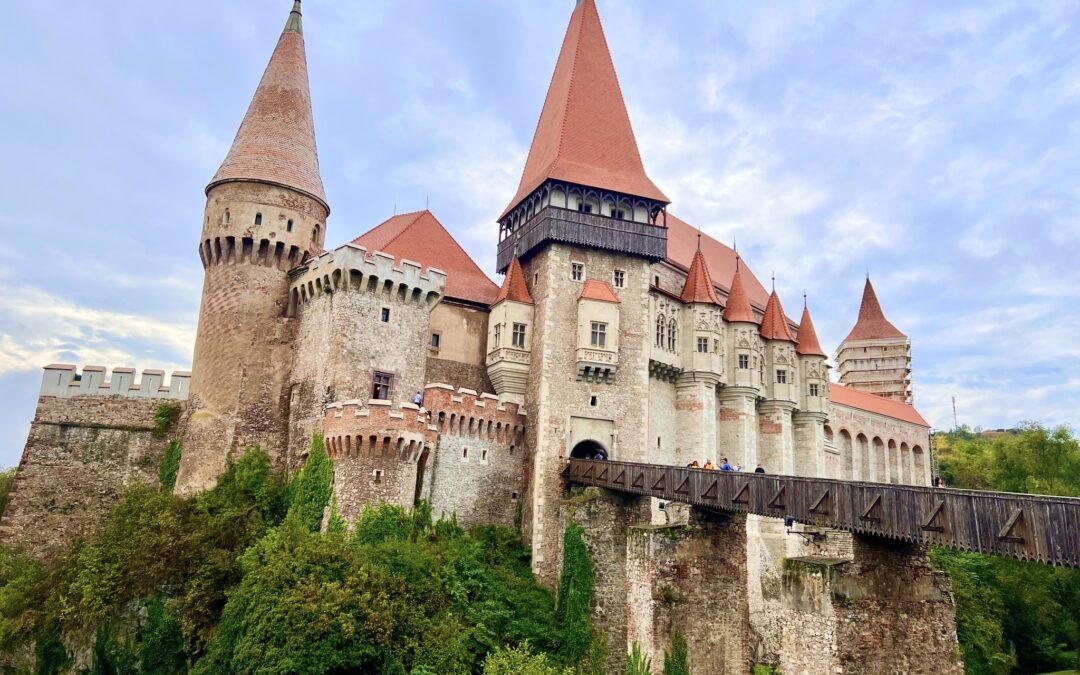
There are more than ten castles in Transylvania that claim to be Count Dracula’s genuine castle. Naturally, for tourism purposes, every castle in Transylvania claims to be Dracula’s Castle. If it were to follow Jonathan Harker’s journey, he travelled from London to Munich, Vienna, and then Budapest by train.

From Budapest, by train again, he headed about 200 miles East to a small town called Bistritz. In Bistritz Jonathan had to meet the Count. He couldn’t find the Count in Bistritz because his castle was outside the city walls, about 30 miles up in the mountains. 

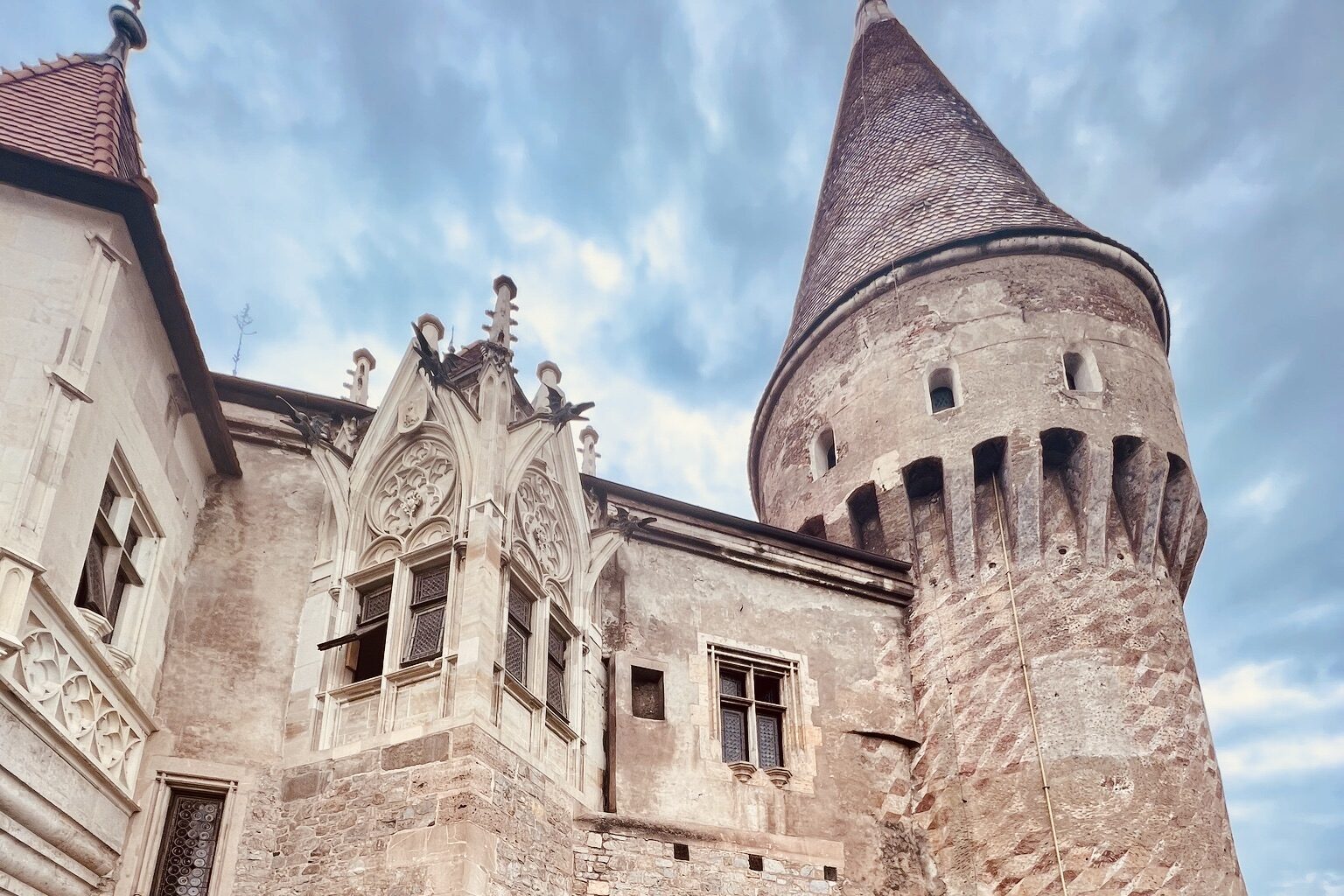
Nowadays, Transylvania has considerably fewer forests. However, if you head 30 miles East from Bistritz, you will find a welcoming hotel built like a castle with great entertainment when it comes to the legend. 

The Hotel Castel Dracula has 66 rooms and can host about 140 people. The journey from Bistritz to the castle is pretty scenic.

Was there a real Dracula?

There’s a very good chance the mysterious “Count Dracula” existed in real life. Except he wasn’t called Dracula (probably a local name), and he wasn’t a vampire, just a “humble” human being. He liked lavish parties with young girls, which raised suspicions about the rich’s lifestyle. 

Rumour has it that the extravagant parties at the castle used to attract some other rich landlords from the country, who arrived accompanied by beautiful young ladies so that Count Dracula could pick his victims. 

Jonathan Harker took a trip to Transylvania to meet Count Dracula and discover the truth about the undead. Bram Stoker did such a great job in his masterpiece. It’s hard to believe the book is fiction, and that’s why, upon its release, the novel had a worldwide success. 

Count Dracula, as described in the novel, didn’t exist, but a wealthy landlord did.

Not to be mistaken with Vlad the Impaler, which brings me to the next point.

Who is Vlad the Impaler?

Vlad the Impaler is always associated with the famous vampire.

There is no historical connection between the two characters. Count Dracula is a fictional character created by Bram Stoker. Vlad the Impaler was a 15th-century prince born in Transylvania, also known as Vlad Dracula of Wallachia. 

He got his name Dracu / Dracula, not because he was believed to be a vampire, but because of his terrible way of punishment. The death penalty during his ruling was impaling, which created panic among his people.

He had no mercy, but it is well known that he never sent an innocent person to death.

The wealthy landlord who owned the castle near Bistritz, and inspired the infamous character was never involved in politics.

Conclusion

To sum up, Bram Stoker created a brilliant, timeless novel without setting foot in Transylvania. The story is based on legends and stories about vampirism and Vlad the Impaler’s cruelty. 

Furthermore, the wildness of Transylvania and the stories about some wealthy landlord and his lavish lifestyle only encouraged/stimulated the author’s imagination.

For a good understanding of this classic masterpiece, we need to consider the time when the novel saw the light of day.

A legend like Dracula became a bestseller at a time when people didn’t know much about Transylvania, also a time when the World didn’t have the internet to fact-check if the legend of a mysterious count was real or just a legend. 

One hundred time-tested books [How many have you read?]

One hundred time-tested books [How many have you read?]

A good book tempts you to step inside its pages, whispering promises of distant worlds and unfamiliar lives.
A great book does something quieter and far more powerful. It closes the distance between you and the story until the boundary disappears, until the thoughts feel like yours, the emotions echo in your chest, and leaving becomes impossible.

Some stories arrive like passing guests, pleasant and forgettable. Others linger. They rearrange something within you, leave fingerprints on your perspective, and return to you in quiet moments long after the final page is turned. These are the books that don’t simply entertain, they inhabit.

From the widely adored to the deeply treasured, from the daringly controversial to the endlessly acclaimed, this is not just a list but a gathering of voices that echo through time. Save it, return to it, and tell me, how many have you wandered through? Which one captured your heart? And which stories still deserve their place among these legends?

Within these pages lives a quiet kind of immortality. Come explore the classics, where wisdom lingers, and every line has something to teach.

  1. Great Expectations – Charles Dickens
  2. A Tale of Two Cities – Charles Dickens
  3. Madame Bovary – Gustave Flaubert
  4. Don Quijote de la Mancha – Miguel de Cervantes
  5. Pride and Prejudice – Jane Austen
  6. Emma – Jane Austen
  7. The Aeneid – Virgil
  8. The Iliad and the Odysea – Homer
  9. Dracula – Bram Stocker
  10. War and Peace – Leo Tolstoi
  11. Anna Karenina – Leo Tolstoi
  12. Les Miserables – Victor Hugo
  13. The Hunchback of Notre Dame – Victor Hugo
  14. Gone with the Wind – Margaret Mitchell
  15. The Idiot – Fyodor Dostoevsky
  16. Crime and Punishment – Fyodor Dostoevsky
  17. Brothers Karamazov – Fyodor Dostoevsky
  18. Quo Vadis – Henrik Sienkiewicz
  19. Wuthering Heights – Emily Bronte
  20. Jane Eyre – Charlotte Bronte
  21. Frankenstein – Marry Shelly
  22. The Old Man and the Sea – Ernest Hemingway
  23. For Whom the Bells Toll – Ernest Hemingway
  24. The Great Gatsby – Scott Fitzgerald
  25. The Curious Case of Benjamin Button – Scott Fitzgerald
  26. The Divine Comedy – Dante Alighieri
  27. The Three Musketeers – Alexandre Dumas
  28. The Count of Monte Cristo – Alexandre Dumas
  29. The Man in the Iron Mask – Alexandre Dumas
  30. The Portrait of Dorian Grey – Oscar Wilde
  31. Moby Dick – Herman Melville
  32. The Process – Franz Kafka
  33. Metamorphosis – Franz Kafka 
  34. In Search of Lost Time – Marcel Proust
  35. Mrs. Dalloway – Virginia Wolf
  36. A Room of One’s Own – Virginia Wolf
  37. Orlando – Virginia Wolf
  38. 1984 – George Orwell
  39. La Comedie Humaine – Honore de Balzac
  40. Little Women – Louisa M Alcott
  41. The Scarlet Letter – Nathaniel Hawthrone
  42. Catcher in the Rye – J. D. Salinger
  43. Far From the Madding Crowd – Thomas Hardy
  44. Tess of d’Ubberville – Thomas Hardy
  45. Middlemarch – George Elliot
  46. Ulysses – James Joyce
  47. The Master and Margarita – Mikail Bulgakov
  48. All Quiet on Western Front – Erique M. Remarque
  49. Rebecca – Daphne du Maurier
  50. The Magic Mountain – Thomas Mann
  51. Death in Venice – Thomas Mann
  52. Buddenbrooks – Thomas Mann
  53. A Journey to the Centre of the Earth – Joules Verne
  54. Around the World in 80 Days – Joules Verne
  55. The Painted Veil – W. Somerset Maugham
  56. The Chronics of Narnia – C. S. Lewis
  57. North and South – Elizabeth Gaskell
  58. Lolita – Vladimir Nabukow
  59. The Wonderful Wizzard of Oz – Frank Baum
  60. Lord of the Rings  – J. R. R. Tolkien
  61. Treasure Island – Robert Louis Stevenson
  62. The Time Machine – H. G. Wells
  63. Of Mice and Men – John Stainback
  64. One Hundred Years of Solitude – Gabriel Garcia Marquez
  65. Love in the Time of Cholera – Gabriel Garcia Marquez
  66. Shakespeare
  67. Arabian Nights – translated by Andrew Lang
  68. Faust – J. W. Goethe
  69. Beloved – Toni Morrison
  70. The Second Sex – Simone de Bevoire
  71. The Diary of a Young Girl – Anne Frank
  72. Brave New World – Aldous Huxley
  73. Alice’s Adventures in Wonderland – Lewis Caroll
  74. The Adventures of Huckleberry Finn – Mark Twain
  75. The Adventures of Tom Sawyer – Mark Twain
  76. The Adventures of Sherlock Holmes – Arthur Conrad Doyle
  77. The Hound of Baskervilles – Arthur Conrad Doyle
  78. Vanity Fair – William Makepeace Thackeray
  79. Uncle Tom’s Cabin – Harriet Beecher Stowe
  80. Heart of Darkness – Joseph Conrad
  81. The Jungle Books – Rudyard Kipling
  82. The Red and the Black – Stendhal
  83. Ivanhoe – Walter Sott
  84. Robinson Crusoe – Daniel Defoe
  85. Candid – Voltaire
  86. The Misanthrope – Moliere
  87. The Little Prince – Antoine de Saint-Exupery
  88. To Kill a Mockingbird – Harper Lee
  89. Blindness – Saramago
  90. The Portrait of a Lady – Henry James
  91. The Epic of Gilgamesh
  92. The Decameron – Giovanni Boccacio
  93. Pinocchio – Carlo Collodi
  94. Germinal – Emile Zola
  95. The Raven – Edgar Allan Poe
  96. Narrative of the Life of Frederick Douglass – Frederick Douglass
  97. The Seagull – Anton Chekhovv
  98. Don Juan – Lord Byron
  99. Name of the Rose – Umberto Eco
  100. The Stranger – Albert Camus

Bonus

  1. The Godfather – Mario Puzzo
  2. Papillon – Henri Charriere
  3. Phantom of the Opera – Gaston Leroux
  4. Murder in Orient Express – Agatha Cristie

Pages of Wisdom: My Journey Through the Century of Literature

I have read 37 of the 100 time-tested books, and each has shaped my understanding of life and literature in unique ways. Here are some of the titles that truly resonated with me: 

“Pride and Prejudice” by Jane Austen. This novel taught me about the complexities of love and social class. Elizabeth Bennet’s character showed me the importance of being true to yourself, even in a world of expectations. 

“1984” by George Orwell. This book opened my eyes to the dangers of totalitarianism and the importance of free thought. It’s a reminder of how precious our liberties are. 

“To Kill a Mockingbird” by Harper Lee.  Through the eyes of Scout Finch, I learned about empathy and standing up for what is right. This book helped me understand the challenges of race and injustice. 

“The Great Gatsby” by F. Scott Fitzgerald. This story revealed the emptiness of the American Dream. It reminded me that wealth does not guarantee happiness, and true connection is what matters most. 

“The Catcher in the Rye” by J.D. Salinger. Holden Caulfield’s struggles with identity and belonging echoed my own feelings of being lost during my teenage years. This book helped me navigate those confusing times. 

In looking at my list, I can see how my personal interests influenced my choices. I tend to gravitate towards books that explore deep human emotions and social issues. Diverse reading lists broaden our perspectives and help us understand different experiences. This idea rings true for me, as these books pushed me to think critically about the world around me. 

On the other hand, reading widely — beyond our comfort zones — challenges our views and can even change them. I found this to be true when I read books like 

“The Colour Purple” by Alice Walker, which made me reflect on the struggles faced by women of colour in America. Although I knew about some issues, this book made the struggles feel more real and personal. 

I also ventured into classics that I initially thought were not for me, like 

“Moby Dick” by Herman Melville. It challenged my patience and thinking, yet taught me about obsession and the human spirit. While I had preconceptions about its complexity, it ultimately shaped my appreciation for literary depth. 

Another impactful read was 

“One Hundred Years of Solitude” by Gabriel García Márquez. This magical realism novel introduced a new style of storytelling that intrigued me. It showed how culture and history intertwine, teaching me about Latin American philosophy in a unique way. 

Every book I chose had a role in shaping my literary journey. Some of them confirmed my views on life, while others challenged me to reconsider those views. By picking a variety of genres and subjects, I’ve not only grown as a reader but also as a person. Each story leaves a mark on me, guiding my thoughts and actions in the real world.

1. Understanding Human Emotions

Reading classic books like “Pride and Prejudice” and “Moby Dick” can teach us a lot about emotions. For example, the love and misunderstandings in “Pride and Prejudice” show how pride and prejudice can hide true feelings. These characters confront their flaws, illustrating the ups and downs of relationships. This has made me realise that understanding our own emotions and the emotions of others is key to forming good relationships in life.

2. Facing Challenges and Moral Choices

Many timeless stories, such as “Crime and Punishment”, delve deeply into moral choices and the consequences of our actions. The struggle of Raskolnikov, who faces guilt after committing a crime, helps me reflect on my own choices and the weight of my actions. It taught me that everyone has their burdens and that making choices requires thinking about what is right or wrong. This has influenced my own ethical views and my understanding of the importance of empathy in everyday life.

3. The Nature of Society

Books such as “1984” challenge our views about society and power. Orwell’s portrayal of a totalitarian regime warns us about the risks of losing freedoms and the role of government in our lives. This made me more aware of current social issues and the importance of standing up for democracy and personal rights. Understanding how societies can shape lives and thoughts has deepened my appreciation for our freedoms and the responsibilities that come with them.

4. Identity and Self-Discovery

Reading “The Catcher in the Rye” has shown me the journey of discovering one’s identity. Holden Caulfield’s struggles reflect the confusion many of us feel as we try to find our place in the world. This resonates with my own experiences of growing up and figuring out who I am. It taught me that it’s okay to feel lost sometimes and that self-discovery is an important part of life.

5. The Power of Storytelling

Classic literature often emphasises the richness of storytelling itself, as seen in “One Hundred Years of Solitude”. This book weaves magic realism into the lives of the Buendía family, showing how stories help us understand our past and culture. It has made me value the stories we share in our lives, recognising their power to connect generations and convey wisdom.

6. The Complexity of Human Nature

Through the character studies of authors like William Faulkner, we see the complexities of human nature. In “The Sound and the Fury,” Faulkner portrays how individual perspectives shape our understanding of events and relationships. This complexity has taught me not to judge people quickly and to appreciate the diverse experiences that shape them. Understanding different viewpoints reminds me that life is not black and white but filled with shades of grey. 

7. Courage and Resilience

The characters in “To Kill a Mockingbird” teach us about courage and standing up for what is right. Atticus Finch’s fight for justice, despite overwhelming odds, inspires me to act with integrity in my own life. It highlights the importance of resilience and bravery in facing social injustices, encouraging me to advocate for our values even when it’s difficult. 

Engaging with these classic texts has not only deepened my understanding of human nature but also shaped my philosophy toward life and how I interact with the world around me. Exploring the broader implications of reading time-tested works can significantly deepen your understanding of literature as an art form.

Classic Literature Shapes the Canon

By reading time-tested books, you can see how they form the foundation of the literary canon. These works, often highlighted in the collaborative study by Blackwell et al. (2008), show common themes and styles that define great storytelling. Classics are not just old books; they are the building blocks of literature.

Understanding Genres

Many genres we enjoy today have roots in these classic works. For example, the adventure tales of authors like Homer or the complex dramas of Shakespeare set the stage for modern fantasy and drama. By reading the originals, you can appreciate how genres evolved over time and how today’s stories borrow from these early influences.

Storytelling Techniques

Great literature often employs storytelling techniques that remain relevant over time. Exploring classic texts allows you to recognise narrative structures still used today, such as the hero’s journey and the unreliable narrator. These techniques shape the way stories are told and understood, revealing the craft behind compelling narratives.

Cultural Reflection and Identity

Many time-tested books provide insight into the culture and values of their times. For instance, by reading a novel like “Pride and Prejudice,” you gain an understanding of social norms around gender and class during the 19th century. This exploration helps you connect literature with historical context, enriching your reading experience.

Emotional Resonance

Classics often highlight universal human emotions and struggles, such as love, loss, and ambition. By engaging with these themes, you learn how literature captures the complexities of life. This connection helps foster empathy and a deeper appreciation for the human experience conveyed through stories.

Exploration of Styles and Voices

Classic literature offers a variety of voices and styles, from the poetic language of John Keats to the sharp wit of Mark Twain. Delving into these different styles broadens your understanding of what literature can be. It encourages you to appreciate different forms of expression within the art of storytelling.

Timeless Lessons

The lessons learned from classic literature often transcend time and place. Works like “The Great Gatsby” teach about the American Dream and its discontents, prompting readers to reflect on their own aspirations and disillusionments. These timeless lessons help you understand life more deeply.

Critical Thinking

Engaging with complex texts sparks critical thinking. Classics often present moral dilemmas and philosophical questions that challenge you to think beyond the surface. This process sharpens your analytical skills and enables you to approach literature (and life) with a more thoughtful perspective.

By exploring these classic works, you not only enhance your enjoyment of literature but also develop a more nuanced understanding of how stories function as art. You start to see literature as a conversation between the past and present, recognising the patterns and themes that resonate throughout time.

Reflect on the challenges and joys encountered during your reading journey, particularly in tackling complex texts. When you start reading complex books, like classics or deep novels, it can feel a bit like climbing a steep hill. Sometimes it’s hard to understand what you’re reading or to follow the story. But even though it can be tough, there are many reasons to push through.

Complex texts can really make our brains work hard. This hard work is good for us; it helps build mental strength and improves reading skills. When we struggle with difficult words or ideas, we’re actually training our minds to think better. It’s like lifting weights for our brains! 

When I read books that use difficult language or that tell stories in unusual ways, I often feel frustrated. But these challenges can bring a sense of joy. When you finally understand a tough passage or find meaning in a tricky section, the feeling is wonderful. It’s like solving a puzzle; you feel proud of yourself. 

From the wildly celebrated to the quietly cherished, from the beautifully controversial to the undeniably timeless, this is more than a list; it is a constellation of stories that have shaped minds and stirred souls.

Save it, wander through it, and tell me, which one have you lived inside? Which one claimed you completely? And which stories deserve a place among these giants?

Step into pages that have outlived centuries. Here, wisdom lingers in ink, waiting to be rediscovered.


Verified by MonsterInsights